
The 322nd Block: Newer new media and Telegram

This week…
Your reading time is about 5 minutes. Let’s start.
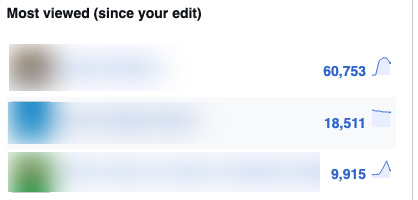
If you are a Wikipedia editor like me, do you ever see a huge spike in the views on articles you’ve edited, like the first and third one shown above — and know precisely why? It always makes me feel a little happy to see I contributed just a little bit in someone’s pursuit of knowledge. The two topics are sports-related, by the way. You have three chances to guess at least one of them. Hint: I don’t care about editing any men-related Wikipedia page.
Your Wikipedia this week: Women in Red
And now, a selection of top stories on my radar, a few personal recommendations, and the chart of the week.
ICYMI: The Previous Block was about Daphne Caruana Galizia and Lyra McKee.
CORRECTION NOTICE: None notified.NEW NEW MEDIA
Copyright is not enough - Why writers need new strategies to stand up to AI
Zoey Forbes for The Dial:
In 2022, U.K. tech company Stability AI released Stable Diffusion, a text-to-image generative artificial intelligence (GenAI) model. Its intention: “democratizing image generation” by “empowering billions of people to create stunning art within seconds.” Among the billions of images in the dataset on which Stable Diffusion was trained were millions of photographs and other visual works scraped from the stock photography website Getty Images. Getty acts as an intermediary, licensing works created by photographers around the world to third parties for use in publications, social media and advertising. Having been trained on many of these works, Stable Diffusion could generate images that looked very similar to Getty’s works and even bore a Getty-style watermark. Stability had not asked Getty for permission to use its images for training Stable Diffusion.
Outraged, Getty wanted legal redress. In January 2023, it sued Stability for copyright and trademark infringement in the English Court — a lawsuit that would lead to the United Kingdom’s first legal judgement on the troubled question of how copyright law applies to GenAI.
Copyright infringement occurs when the whole or a substantial part of a work protected by copyright — such as a photograph, illustration or novel — is reproduced without the author’s permission. This includes making, storing or distributing copies of a work, and dealing with infringing copies, such as importing pirated books or DVDs. In the lawsuit, Getty made three copyright claims. First, that Stability made and stored copies of Getty’s works and used these to train Stable Diffusion. Second, that Stability reproduced a substantial part of Getty’s works in Stable Diffusion’s outputs. Third, in a novel legal argument, Getty claimed that Stable Diffusion, i.e. the model itself, was an infringing copy of Getty’s works.
Had Getty’s case succeeded, Stability would have had to pay damages and perhaps even remove Stable Diffusion from the U.K. market. This would have set a useful precedent for all copyright-holders whose works have been used for AI training without their consent. But at trial, Getty’s copyright case hit two roadblocks. There was no evidence that the training process had taken place in the U.K. and therefore within the English Court’s jurisdiction. Stability also showed that it had subsequently blocked the prompts used to generate outputs in the style of Getty’s works. Getty was forced to abandon its first and second claims.
Loosely linked:
Dopamine TV - How China’s short dramas are redefining entertainment by Lavender Au for The Dial.
China’s web novel platforms embraced AI. Now they are fighting it by Viola Zhou for Rest of World.
AI software that generates ‘rage bait’ developed by Germany’s far-right AfD by Derek Scally for The Irish Times.
La mayoría de la población culpa a los políticos de los bulos científicos: “Los más peligrosos no activan las alarmas” par Daniel Sánchez Caballero en elDiario.es.
« Une sorte d’IA réparatrice » : comment Radio France a redonné voix à Charles Biétry par Matilde Meslin dans La revue des médias.
TELEGRAM ET AL.
Telegram trap: How hidden networks exploit children and their families
Marina Milad for Masrawi:
Three months ago — In a room whose walls were marked by peeling paint, Salma rested her head against the back of her bed, scrolling through social media on her phone, always drawn to whatever influencers happened to be posting. She usually isolated herself like this, spending long hours away from her family. Then she came across posts that had spread widely across the groups she followed—“Work from Home – Girls Only – Model Egypt”—all carrying the same message: “Work from home, quick and generous pay, contact via Telegram.”
The idea tempted her: “Why not earn money without going anywhere, buy whatever you want, and help your father with his medical expenses?” She decided to ask, and the other party replied in a written message that she would be working as a model for summer and lingerie clothing.
She hesitated for a moment, but he quickly cut in and reassured her that “her face would not appear in any photos”—or, in the common term used in this kind of advertising, “cut face.”
Loosely linked:
Inside the Telegram ‘drug rape’ chat group that shocked Germany by Zhaoyin Feng for The Guardian.
Fitness influencers linked to wellness brand helping run illegal steroid market on Telegram by Isaaq Tomkins, Sarah Marsh and Nicola Davis for The Guardian.
Inside Korea’s largest Telegram sex abuse ring: How victims became perpetrators by The Korea Times.
“Hay una verdadera fascinación por las heces”: la era de la monitorización del retrete en las redes sociales por Marita Alonso en El País.
Airbus Espagne : “une grève historique qui part des travailleurs” : comment un groupe Telegram a pris le pas sur les syndicats par Clément Bernet dans Franceinfo.
What I read, listen, and watch
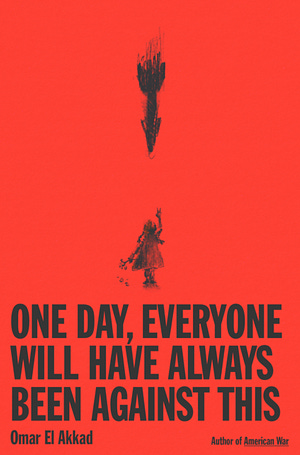
I’m reading One Day, Everyone Will Have Always Been Against This (2025) by Omar El Akkad. I think you already know what this one is about.
I’m listening to Internet kids go to war on Click Here.
I’m watching DW’s documentary on the global human trafficking scheme bringing women in Latin America into Europe.
Chart of the week
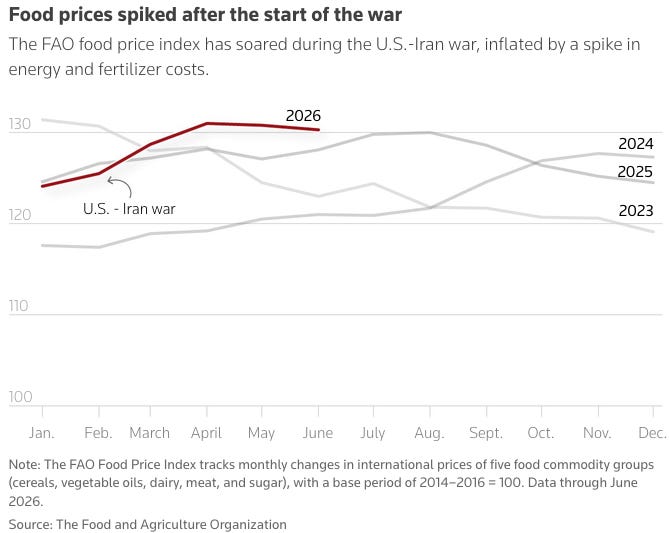
A food crisis we all deserved by Travis Hartman, Anurag Rao, Kripa Jayaram and Ed White for Reuters.