
The 321st Block: Daphne Caruana Galizia and Lyra McKee

This week…
Your reading time is about 5 minutes. Let’s start.
I did it. I wrote 3,000 words for the final assignment of my evidence law studies. It was bearable, but I was not very inspired. I enjoyed learning from my tutor, although final assessments are usually done by another marker. I am learning from this law programme how much I do not like to make arguments at all. I like knowing my facts — legal, scientific, or others — but I’m going to leave the arguing and educating to others. 😂 I see myself preparing a rockstar brief for any interviewer, lawyer, policymaker, researcher, teacher, etc. but I am not sure I have a lot of interest or patience to deal with idiots.
Conspiracy theory watch-list: Apparently, it’s not a theory. A friend said there’s an empirical study that established this — but I haven’t the time yet to look it up. If any of you would be so kind to share more info on this, I’d be grateful. After this assignment is submitted, I will soon have the time to catch up on all my leisurely readings.
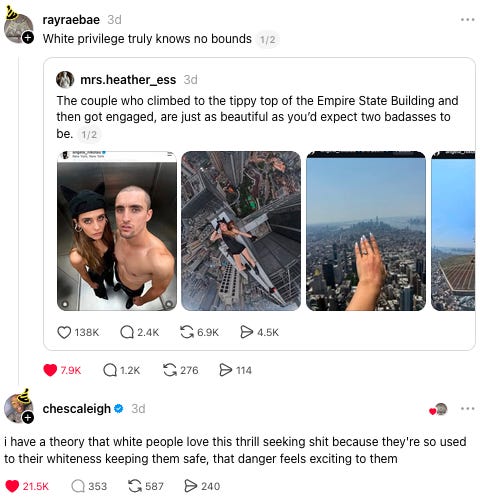
Your Wikipedia this week: White monkey
And now, a selection of top stories on my radar, a few personal recommendations, and the chart of the week.
ICYMI: The Previous Block was about smelly English. FWIW:
How AI is changing language by David Shariatmadari for The Guardian.
CORRECTION NOTICE: None notified. PRESS FREEDOM & MEDIA SAFETY
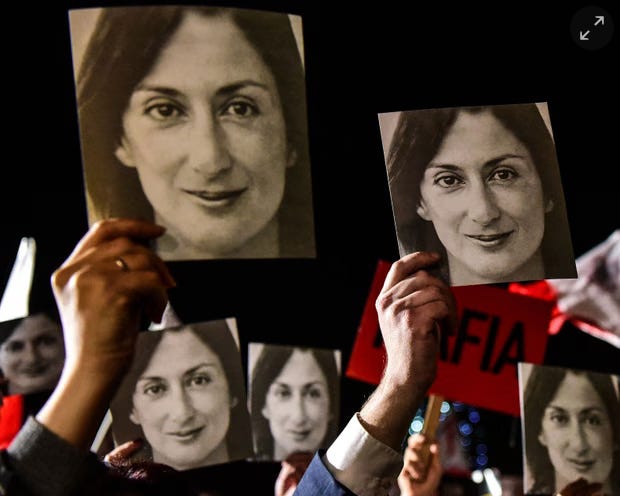
Malta’s ‘trial of the century’ revives interest in murder of Daphne Caruana Galizia
Juliette Garside for The Guardian:
On the steps of the courts of justice in Valletta, there is a bronze statue of Malta’s late president. A bundle of papers in one hand, Guido de Marco stands on a plinth, looking out at passersby in the busy street below.
Every morning since Wednesday this week, his daughter has walked up the steps of the same courthouse, in dark glasses and smart clothes, a bundle of papers in her hand. A sought-after criminal lawyer, Giannella de Marco is representing the man accused of ordering the 2017 murder of the investigative journalist Daphne Caruana Galizia, in a case that continues to dominate public debate nearly nine years after the event.
The man she is defending, Yorgen Fenech, is another establishment figure. If Malta has an equivalent to the Trump dynasty, the Fenechs are it. Their firm runs several Hilton hotels and it owns the Portomaso tower, the island’s second tallest structure.
For Caruana Galizia’s family, a gruelling fight against the powerful and well-connected has taken place since the car bombing that ended her life. The journalist had made enemies at the very highest levels through her investigations. In a deeply polarised society, she had become a target of frequent attacks by government supporters.
Loosely linked:
Three men found not guilty of journalist Lyra McKee’s murder by Mark Simpson and Sara Girvin for BBC.
Uganda’s leading media outlets shut down by army chief by Farouk Chothia for BBC.
‘Bold, truth-telling’: learning from the rich histories of pan-African journalism by Micha Frazer-Carroll for The Guardian.
Canadian court publication ban in Quebec militia case raises press-freedom concerns by Maria Cheng for Reuters.
Una redacción local rastrea las heridas que la dictadura argentina dejó en su comunidad por Silvia Higuera en LJR.
Tras terremotos, prensa venezolana sortea restricciones y pone a prueba sus capacidades por César López Linares en LJR.
« Comment peut-on dénoncer que la Terre brûle si on participe à y foutre le feu ? » : les journalistes environnement face à leur empreinte carbone par Emma Fleter et Yohan Glemarec dans La revue des médias.
IA générative et destructions d’emplois : premier bilan dans la presse française dans Xavier Eutrope dans La revue des médias.
What I read, listen, and watch
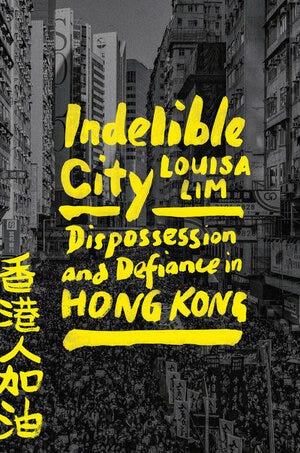
I’m reading Indelible City (2022) by Louisa Lim about the modern history of Hong Kong from the 1842 British takeover to the 1997 negotiations to return to China.
I’m watching BBC World Service’s documentary on Instagram ads promoting CSAM in India.
I’m listening to Al Jazeera’s The Inside Story podcast on the implications of right-wing populism across Latin America.
Chart of the week
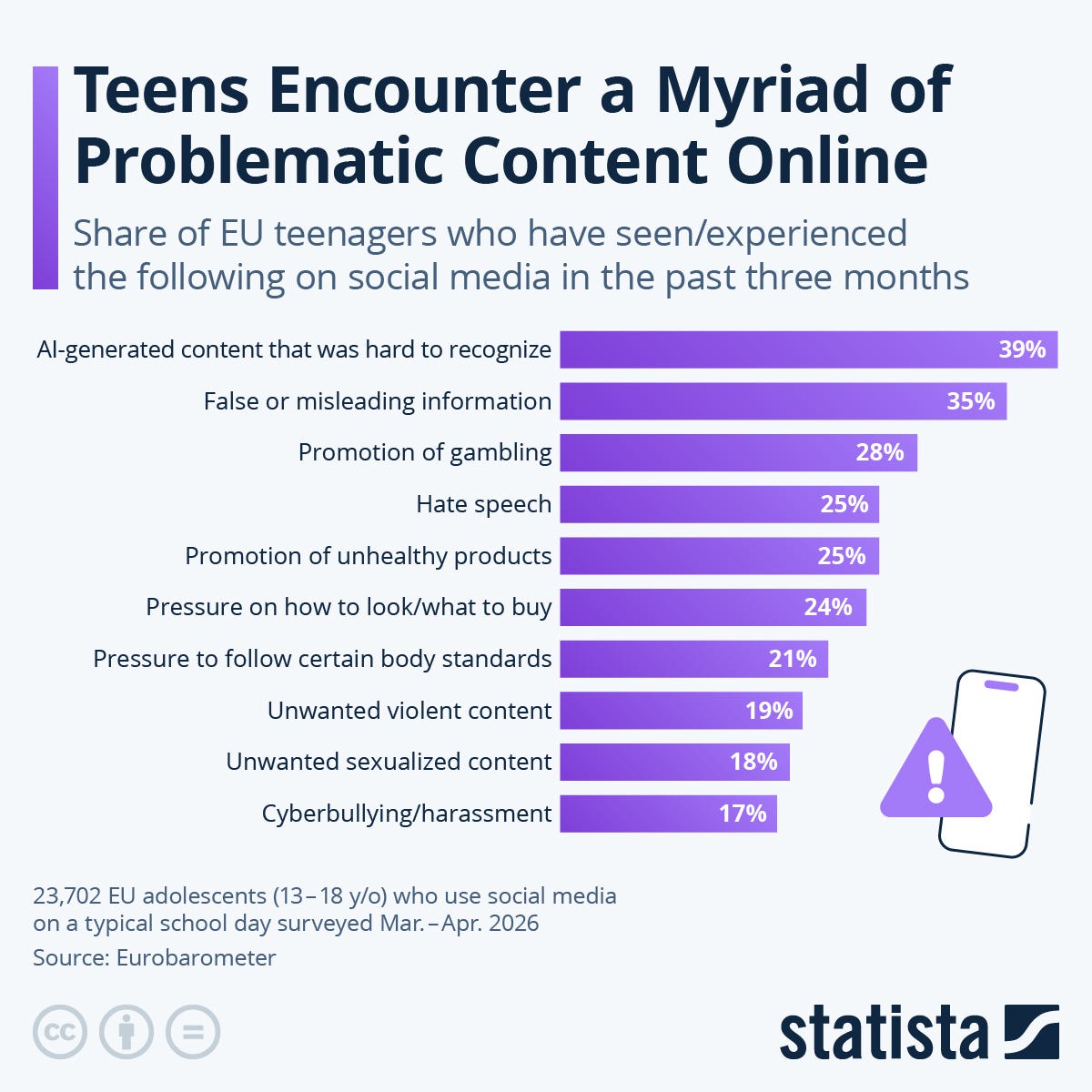
With more and more jurisdictions implementing a social media ban on children and teenagers, Statista charted a recent Euromonitor survey on behalf of the European Commission, which showed the risks young people face online. Felix Richter has more here.