
The 314th Block: The OSINT community is at it again
Plus - prosthetics and human enhancements

This week…
Your reading time is about 5 minutes. Let’s start.
Someone has been trying to get into my dog’s Instagram account all week. I don’t know who or why but it sure is annoying.
Conspiracy theory watch-list: Why, of course, hantavirus
Your Wikipedia this week: Unusual ways to get your article on Wikipedia (You won’t believe why No. 97 is my favourite!)
And now, a selection of top stories on my radar, a few personal recommendations, and the chart of the week.
ICYMI: The Previous Block was about death by disease and disinformation.
CORRECTION NOTICE: None notified.DISINFORMATION, MEDIA & JOURNALISM
A satellite company popular among journalists issued an indefinite blackout in the Middle East. Open-source investigators got to work
Alex Pasternack for CJR:
On March 2, two days into the United States and Israel’s air campaign against Iran, CNN published imagery showing a still-smoking operations center at Port Shuaiba in Kuwait, where six American service members had just been killed by an Iranian drone—before the Pentagon had provided details of the strike, including the full death toll. A day later, the New York Times offered a preliminary rundown of damage to US military sites across the Gulf. In the following days, multiple outlets showed that a strike on an elementary school that killed 175 people had likely been carried out by the US—an apparent mistake, which the Pentagon initially disputed. Amid a cascade of restrictions and conflicting narratives, all of these reports relied on a cornerstone of open-source intelligence: commercial satellite imagery, much of it from a single vendor called Planet Labs.
Then, on March 6, the flow of pictures began slowing to a crawl. Planet Labs, a San Francisco–based company that operates more than two hundred satellites capable of photographing most of Earth’s landmass once per day—an unparalleled frequency among commercial satellites—announced a four-day hold on “all new imagery collected over the Gulf States, Iraq, Kuwait, and adjacent conflict zones.” On March 11, Planet, as the firm is known, told customers the delay would be extended to fourteen days and expanded to include “all of Iran and nearby allied bases, in addition to the Gulf States and existing conflict zones.” Planet said it had made the decision through discussions with experts inside and outside of the government about preventing images from being “tactically leveraged by adversarial actors to target allied and NATO-partner personnel and civilians”—in other words, out of fear that Iran might use them to target the US and its allies in the Middle East.
Loosely linked:
Brazil court ruling underscores risks for photojournalists on the front lines by Leonardo Coelho for LJR.
Iran expands tiered internet access amid continued online blackout by Maziar Motamedi for Al Jazeera.
La Justicia europea reconoce el derecho de los medios a una “remuneración equitativa” por el uso de sus contenidos en las plataformas por María R. Sahuquillo y Quino Petit en El País.
30 ans d’Internet Archive : peut-on sauvegarder le Web avant qu’il ne disparaisse par Laure Coromines dans Usbek & Rica.
DATA, AI & BIG TECH
Thirsty, tired, wired: Singapore, Johor, Batam and the data centre boom
Nicole Lim for Kontinentalist:
Even before generative artificial intelligence (genAI) became mainstream, 1 GW capacity already accounted for 7 percent of Singapore’s electricity needs back in 2021. With no natural resources and a heavy dependence on importing fuels, the country has to carefully manage its resources. The government imposed a moratorium in 2019, temporarily suspending the building of data centres. This led data centre operators to panic.
Singapore responded by signing economic partnerships with and directing attention to special zones in Johor and Batam. Press releases by Singapore’s Economic Development Board noted the “complementary” synergies that Batam and Johor offer.
The pitching of Johor and Batam as alternatives to Singapore is hardly a new concept. Back in 1989, then-Prime Minister of Singapore Goh Chok Tong established the SIJORI Growth Triangle, a cluster between Singapore-Johor-Riau in which Johor and Riau would take on the lower-skilled labour intensive work that Singapore was attempting to move away from. Riau is the group of islands that Batam belongs to.
This act of “offloading” by Singapore to neighbouring countries was later coined the “Singapore+1” strategy—a term used to refer to the “China+1” strategy where lower value work like manufacturing is shifted to surrounding countries.
Loosely linked:
How Brazil is starting to rein in Big Tech by Natalia Viana for Coda.
Silicon Valley wants to put a chip in your brain by Calder McHugh for Politico.
‘Contralgoritmia’, un alegato contra las nuevas tecnologías orientadas a manipular nuestros gustos e inclinaciones por Alejandro Luque en elDiario.es.
“Ce ne sont pas des génies de l’informatique” : derrière les vols de données, des jeunes hackers motivés par la notoriété et l’appât du gain par Luc Chagnon dans Franceinfo.
DEMOCRACY, RIGHTS & REGULATION
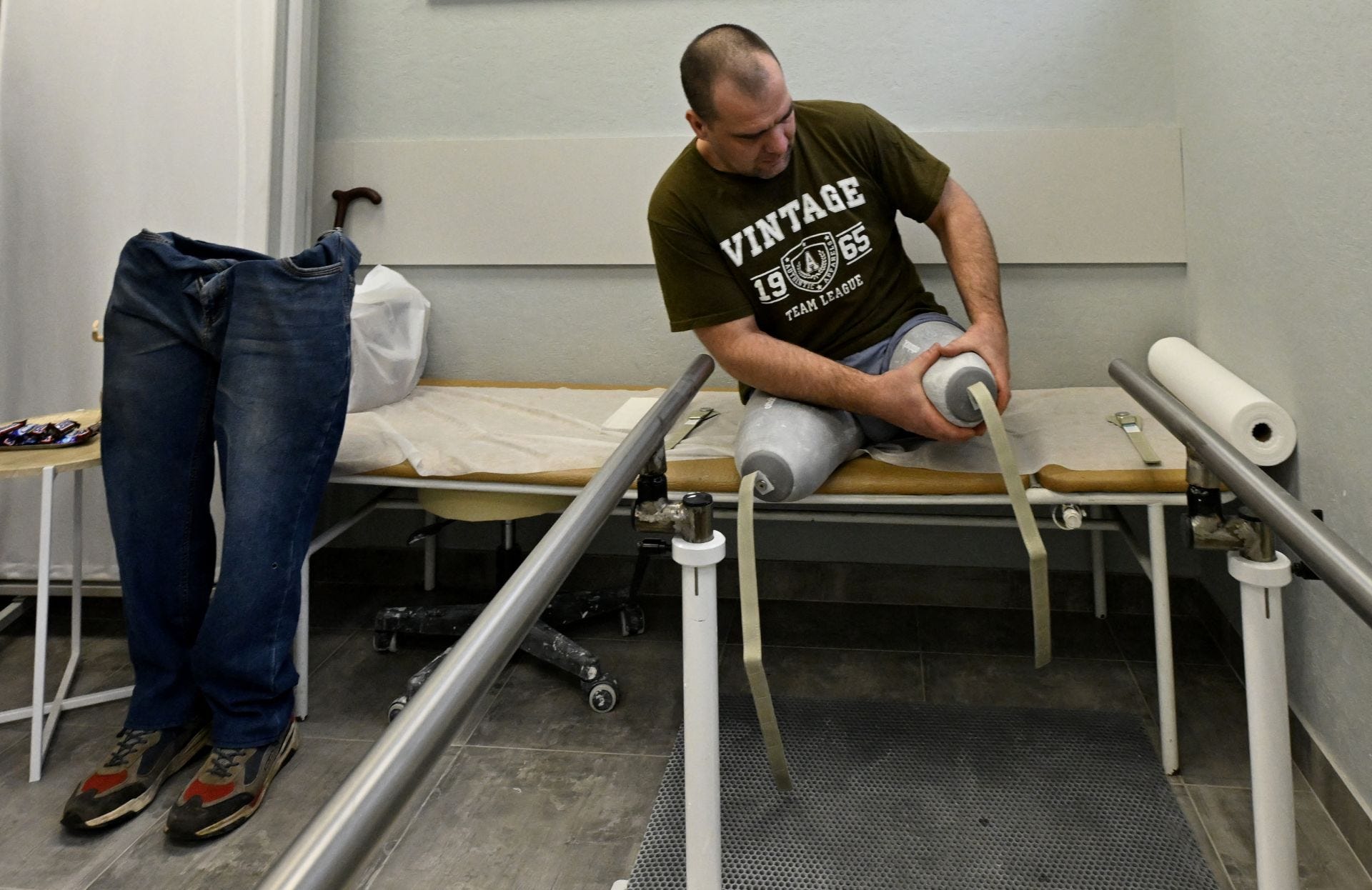
Profit, war and Russia’s growing prosthetics sector
Nikita Aronov for New Lines Magazine:
Andrei Danko, a 49-year-old paratrooper from the Ulyanovsk region, fought in Ukraine with the 83rd Separate Guards Air Assault Brigade near Bakhmut. He was seriously wounded in late 2024 and lost his leg. After being discharged from a hospital for drinking alcohol — something he does not deny — he was not formally granted disability status, leaving him without access to proper rehabilitation and benefits.
For more than a year, Danko has been trying to obtain a prosthetic limb, but says he has been repeatedly redirected between different agencies, unable to secure the paperwork required. In a video appeal addressed directly to President Vladimir Putin, he described his situation in blunt, emotional terms.
“I can’t even go outside to buy bread in this wheelchair. At least give me a stick — tie something to my leg,” Danko said. “I know what they’ll say: It’s my own fault. Yes, it’s my fault for believing,” he concluded.
Loosely linked:
Drones are reshaping Sudan’s civil war by Sophie Neiman for New Lines Magazine.
The origin stories of Bosnian tattoos are only skin-deep by Ana Sekulić for New Lines Magazine.
Las conexiones de un candidato del Centro Democrático con una red neonazi internacional en Bogotá por Michael Colborne en 070.
À Paris, le fiasco des néofascistes, privés de leur défilé annuel par Valentin Wender et Thierry Vincent dans Blast.
What I read, listen, and watch
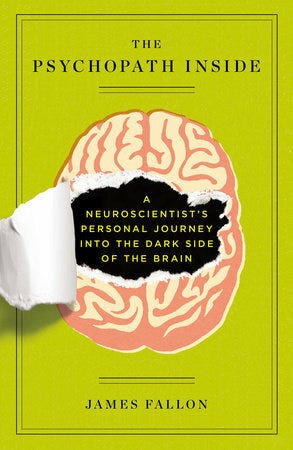
I’m reading The Psychopath Inside (2013) by James Fallon. I don’t normally read book reviews before I reading the book because I don’t want them to subconsciously affect my experience. However, when it’s a popsci book by an unfamiliar name, I want to make sure that the science is sound or at least plausible, if speculative. Anyway, I’d like you to know that the reviewers are completely divided on why they disliked this — some got annoyed because he talked too much about himself (is the book title not itself a clue?) and others were complained because he got too technical with the “science stuff.” Is this something that happens with other book reviews too?? Baffling! He reminds me of my criminology professor, though, who “could have been” a very successful criminal, if not for a number of fateful factors.
I’m listening to how Elon Musk fuses rockets and tech to shape far-right ideology on The Lede with Faisal Al Yafai and Quinn Slobodian.
I’m watching ARTE’s documentary on the first hand transplant in Finland. The film also took us to India, after the Finnish transplant candidate reached out to an Indian woman who had a double hand transplant to learn about her experience. India has conducted such transplants since 2015. The first patient who underwent the procudure in the Indian hospital the film crew visited was hired by the medical team to help families with consultation. He gave his first paycheck to the family of his donor. It was very touching, I cried. 😭
Chart of the week
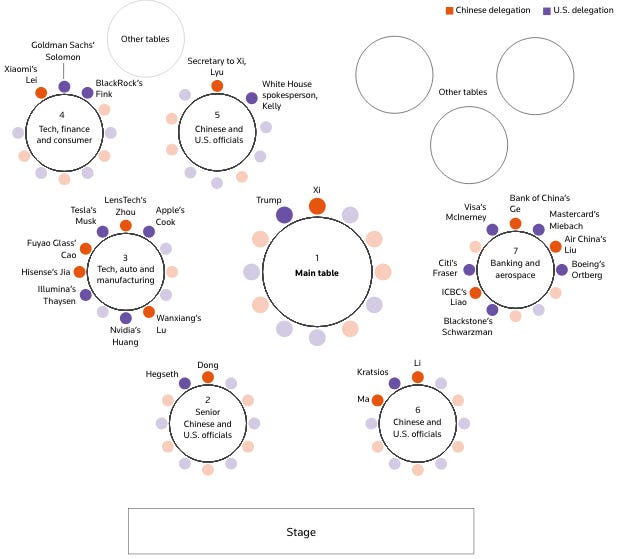
Not to be voyeuristic, but Adolfo Arranz, Eduardo Baptista, Laurie Chen, Han Huang and Ju-min Park at Reuters mapped out the seating arrangements at the state banquet in Beijing, and it’s like a wedding reception plan. They even have the menu! I hungy!