
The 310th Block: Risky rice
And the prediction market, again

This week…
Your reading time is about 15 minutes. Let’s start.
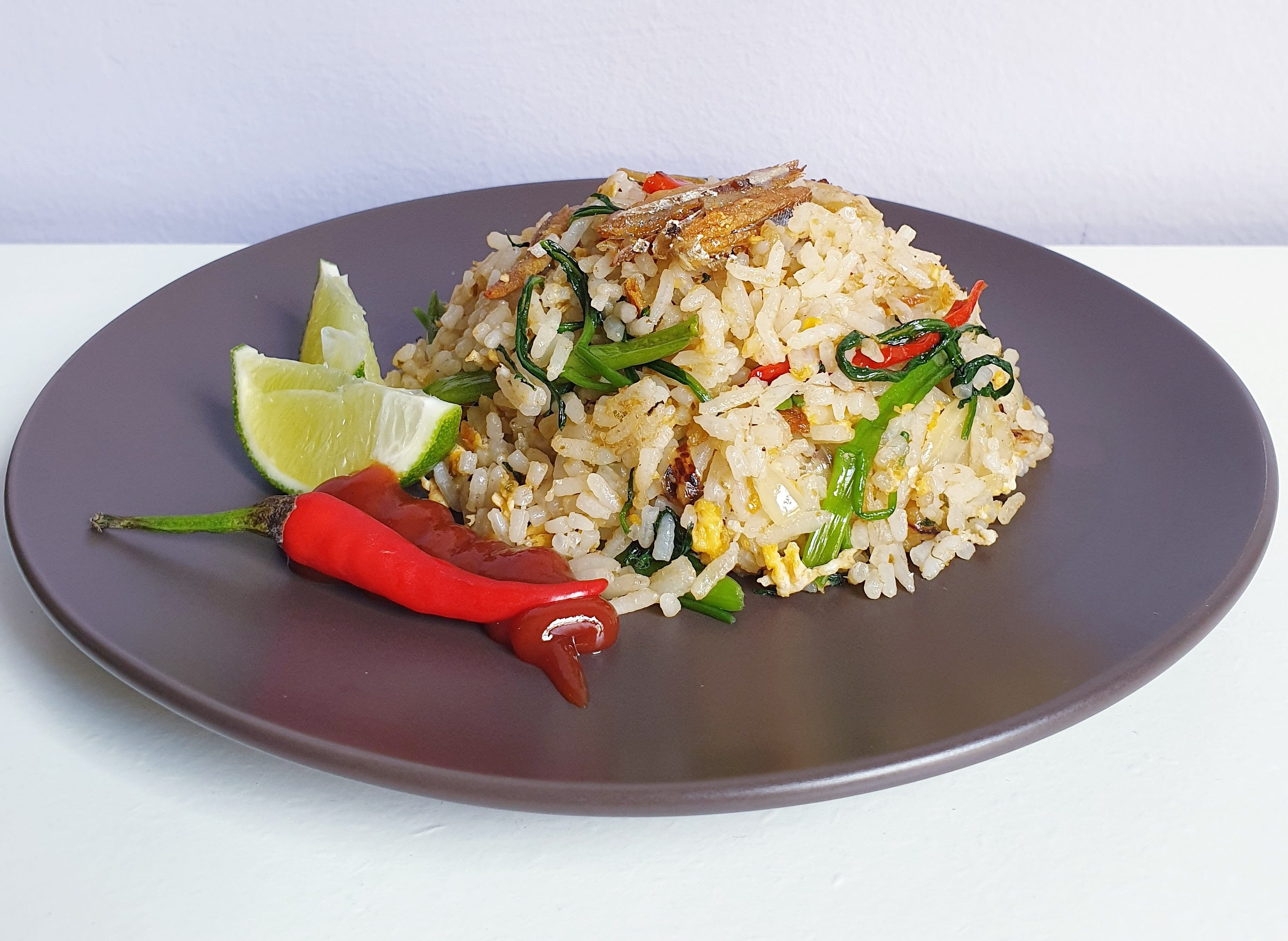
In the Malay language, there are many words and phrases to specifically describe rice in its various states, including padi (unhusked rice grain), beras (raw rice grain), nasi (cooked rice), and hangit (burnt, specific to rice). The crispy, toasted rice at the bottom of the pot is called kerak, which is different from burnt rice and is considered a delicacy and comfort food in many cultures, including Koreans (who call it nurungji) and Iranians (tahdig). There are also many Malay proverbs containing the word rice. One that feels especially relevant here is “pinggan tak retak, nasi tak dingin,” translated as “the plate is not cracked, the rice is not cold,” which describes being so careful in doing something that you make no mistakes. There are also too many ways to prepare rice, but one thing I had never done is adding salt when steaming rice.
It reflects something simple: when a food is central to daily life, the language, and the knowledge around it, gets precise. But when I see panic over leftover rice, over and over again, because my algorithm doesn’t care that I said I wanted to “see less of this,” it’s probably not enough to say, “you don’t undersatnd my culture,” and leave it at that. Because what we’re seeing isn’t just about rice. It’s about how fear spreads, and who it sticks to.
Risky rice
The phenomenon commonly dubbed “fried rice syndrome” or “leftover rice syndrome” or “reheated rice syndrome” has recently surged across the internet, fueled by a viral TikTok 2024 video from second-year medical student Janny Garcia. This original video, which claimed that being a medical student meant “never being able to comfortably reheat rice ever again,” was soon amplified when the recipe website Food52 stitched the post. In that explainer, food editor Em Ziemski warned viewers that hospital workers consider these some of the “worst cases of food poisoning they’ve ever seen” emphasising that the condition can lead to death. These posts advised viewers to simply throw away leftover rice older than one day.
Despite the alarming rhetoric, the scientific and statistical reality of the pathogen behind this fear reveals a much more complex story regarding global health, cultural practice, and cognitive bias.
Bacteria’s background
The culprit, Bacillus cereus, is a ubiquitous soil bacterium that produces highly resilient, heat-resistant spores. While standard cooking temperatures are sufficient to kill vegetative bacteria, these dormant spores can survive the heat. If cooked food is allowed to cool slowly or is stored in the “microbiological danger zone” (between 5°C and 65°C), these spores can germinate into viable bacteria that multiply rapidly.
The bacterium causes two distinct types of illness: the diarrheal type, caused by toxins produced in the small intestine after ingestion, and the emetic (vomiting) type. The emetic type is particularly dangerous because it is caused by cereulide, a toxin pre-formed in the food during bacterial growth. Cereulide is exceptionally stable, surviving for two hours at 121°C and resisting digestive enzymes, which means that reheating contaminated food does not inactivate the toxin.
Global burden and pathogen ranking
While the internet panic might suggest a widespread epidemic, the actual global burden of B. cereus poisoning is relatively low compared to other foodborne pathogens.
In the United States, there are an estimated 63,400 episodes of B. cereus illness annually. In ranking models of foodborne pathogens, it typically places 7th or 9th, contributing to less than 0.2 per cent of the estimated 48 million annual foodborne illnesses in the country.
In Canada, approximately 36,269 annual cases occur, ranking it 5th among 30 specified pathogens. Within Canada’s broader context of 4 million annual foodborne episodes, B. cereus represents roughly 0.9 per cent of the total burden.
In China, a major rice-consuming nation, 419 outbreaks were documented between 2010 and 2020, leading to 7,892 confirmed cases and 5 fatalities. In China, it is ranked as the fourth leading bacterial pathogen associated with foodborne outbreaks.
The risk exists, but it is far from the dominant threat Janny and Em made it out to be.
Wrong identity
The label “fried rice syndrome” is frequently a misnomer, as many high-profile and fatal B. cereus cases actually involve other starches. For example, the widely recirculated story of a 20-year-old student’s death in Belgium involved leftover spaghetti that had been left at room temperature for five days, not rice. Another fatal family outbreak was linked to pasta salad. Similarly, a 2023 outbreak at a secondary school in Uganda was likely caused by B. cereus in posho (boiled cornmeal) and beans, while testing of dry rations of rice at the school returned negative results.
Meanwhile, leafy greens and raw vegetables have caused several major food poisoning outbreaks, such as the 2011 E. coli outbreak in Germany and the 2024 Salmonella Umbilo outbreak linked to Italian rocket salad. Interestingly, during the 2011 German outbreak, when public health officials were still trying to find the source of the bacteria, they noticed a pattern emerged early on. E. coli outbreaks typically affect young children and the elderly, but this outbreak disproportionately affected a large number of young women, so the experts considered the dietary patterns as a hypothesis-generating clue. Salad and raw vegetables were suspected partly because of consumption patterns, although the source was conclusively identified through detailed epidemiological tracing and statistical analysis, and not just demographic inference alone.
Nevertheless, these events have not sparked the same specific type of culturally specific labels or viral panic cycles. I would like, actually, to have a little bit more alarm over the state of our salad produce, as it is served as a side dish practically everywhere, often with that one wilted, decaying leaf smearing its semi-liquid state quietly contaminating the rest.
Descriptive or discriminating
There’s a reason global health bodies are careful about naming. To avoid cultural stigma, the World Health Organization (WHO) issued best practices for naming diseases in 2015, advising against the use of geographic locations, cultural references, or specific foods. The guidance was explicitly designed to mitigate the unintended negative impacts caused by earlier terminology such as Middle East Respiratory Syndrome (MERS). Although the name MERS made sense to researchers at the time of its discovery in 2011, because the disease had only been reported in that region, it ultimately resulted in significant stigma, leaving those infected reluctant to seek medical care due to feelings of shame or association. By prioritising neutral and generic descriptive terms based on symptoms or pathology (e.g., “respiratory disease” or “watery diarrhoea”), the WHO provided a scientific and social framework to prevent a region or culture from being tarnished by its association with a pathogen.
The value of this advisory became particularly clear during the COVID-19 pandemic, where the official names SARS-CoV-2 and COVID-19 were chosen specifically to avoid the public fear and stigma associated with previous outbreaks. Despite the early circulation of derogatory misnomers such as “Wuhan virus” or “Chinavirus,” the official terminology provided a standardised alternative that focused on the disease’s genetic makeup and year of discovery rather than its geography. Using location-based names for COVID-19 was a form of politicisation that defied the best practices and guidelines of public health officials and was used to shift blame onto others rather than addressing the health crisis. This rhetoric had real-world consequences, fueling racially charged bias and instances where members of the Asian diaspora were harassed and blamed for being carriers of the disease.
The advisory’s efficacy is seen in how quickly the public and health authorities identified location-based names as derisive and harmful. While names created outside the scientific community can stick due to social media, the existence of the WHO guidelines allows for a formal rejection of names that incite fear or refer to specific foods and cultures.
This same logic applies to the term “fried rice syndrome.” By naming a condition after a specific food staple of various ethnic groups, the term risks provoking the very backlash against ethnic communities that the WHO sought to eliminate. Perhaps we have learned nothing from the xenophobic history of MSG and “Chinese Restaurant Syndrome”. Coined in the 1960s, that term was used to delegitimise Asian culinary practices despite scientific evidence showing MSG is safe.
This rice panic ironically occurs as TikTok sees a rise in “Chinamaxxing,” where Western users aestheticise Chinese habits like drinking hot water or congee, at their very Chinese time of their lives. Meanwhile, members of the Asian diaspora have expressed unease that their culture is being reduced to a “mood board” while their traditional foods are simultaneously stigmatised as “unsanitary” or “poisonous.”
Western gaze
Despite rice being a central staple in Asian, African, and Latin American cultures, B. cereus poisoning from rice remains relatively low in these regions. This disparity may exist because proper rice cooking and storage are not as deeply ingrained in Western culture, where rice is a relatively less common food item. Many Western households do not own a rice cooker, which is considered an essential appliance in many Asian homes for maintaining safe food temperatures. I also don’t know if we are ready to have broader conversations about domestic sanitation and hygiene practices, like footwear, outside versus inside clothes, and daily showers!
I can, however, share a small anecdote. More than a decade ago, a time when global heating wasn’t yet a major issue that caused Europe to experience extreme heatwaves, I worked with a non-profit that trained youth leaders through various programmes, including international social work. One of these individuals was a European, whom I also hosted for the few months that he was going to live in Malaysia. One day, he complained about how quickly his milk spoiled. It turned out he had been leaving it out. Where he came from, milk could apparently sit out for “a few hours, at least.” In Malaysian humidity, that is not how it works. I began noticing similar habits among other Europeans I hosted – bread, milk, and cooked food left on the kitchen table, rotting, even when the fridge was right there. I would tell them once: food goes sour here as quickly as you would in the Malaysian humidity.
Of course, this is anecdotal. A very small sample size. Not representative of the entire Western hemisphere. Not generalising. Not at all.
Cognitive bias
The origin of the viral scare from a medical student is significant. Health science students have a 28 per cent prevalence of hypochondriacal symptoms, significantly higher than the general population. It is a phenomenon often called “medical student syndrome.” (Yeah, not sorry about that one, WHO.)
I have several family members who are physicians. That side of the family is also extremely healthy. Many were varsity athletes and our family meals tend to be steamed, mildly seasoned, and small in portion. And yet, these doctors, because they are regularly exposed to extreme cases in their work, have been on preventative medications for cardiovascular disease since their early 40s (I’m estimating, since I’ve heard this since I was a child).
Objectively speaking, they are not high-risk. No one in the family has had a cardiovascular event. They would, of course, argue that this is precisely because of those preventative measures. However, not even those who are not on preventative medications have had any major health issues. I will not argue with doctors, but when both the control group and the experimental group show the same outcome, it generally indicates that the manipulated variable had no significant effect on the dependent variable!
Additionally, healthcare professionals are also susceptible to the availability heuristic, where they overestimate the likelihood of a condition because dramatic or rare cases are more easily recalled (such as the fatal Belgian pasta case), and therefore perceived as more common. This can often lead to base rate neglect, where the true prevalence of a disease is ignored in favour of individuating, dramatic information. For B. cereus, many focus on tragic, rare stories while ignoring the base rate mortality of just 0.05 per cent.
These cognitive blind spots mirror historic failures of information. The famous Marshmallow Test, once a celebrated predictor of lifelong success, was later challenged after researchers realised the original sample was too homogeneous (mostly children of Stanford faculty), ignoring essential socioeconomic factors.
Continued influence effect
These patterns are reinforced by the Continued Influence Effect (CIE), where misinformation continues to influence reasoning and shape beliefs even after it has been corrected. Even when individuals understand and accept a correction, the original false narrative persists in memory and affects future decisions, such as continuing to fear a safe item after a false safety warning is debunked.
This is particularly relevant in the context of viral health scares. Once an association, such as rice being “dangerous” takes hold, it can be difficult to fully undo, even with accurate information. Spreading misinformation, particularly when based on incomplete information (often termed “malinformation” when intentionally manipulated), poses significant dangers to public health, safety, and democratic processes.
The Western gaze often filters Asian culture through existing prejudices, latching onto rare medical events to cancel staple foods while remaining indifferent (at the very least) to greater safety risks in Western culinary contexts.
Maybe it’s a little too late to change minds about it, or as we say in Malay, nasi sudah menjadi bubur (the rice has become porridge) whenever we describe a situation that is irreversible or a mistake that cannot be undone. But, if this results in a bit of rice gatekeeping, I can’t say I mind. The people are already “discovering” and gentrifying matcha, boba, and ube. They’re coming after the rice. Then they’re coming after the pandan.
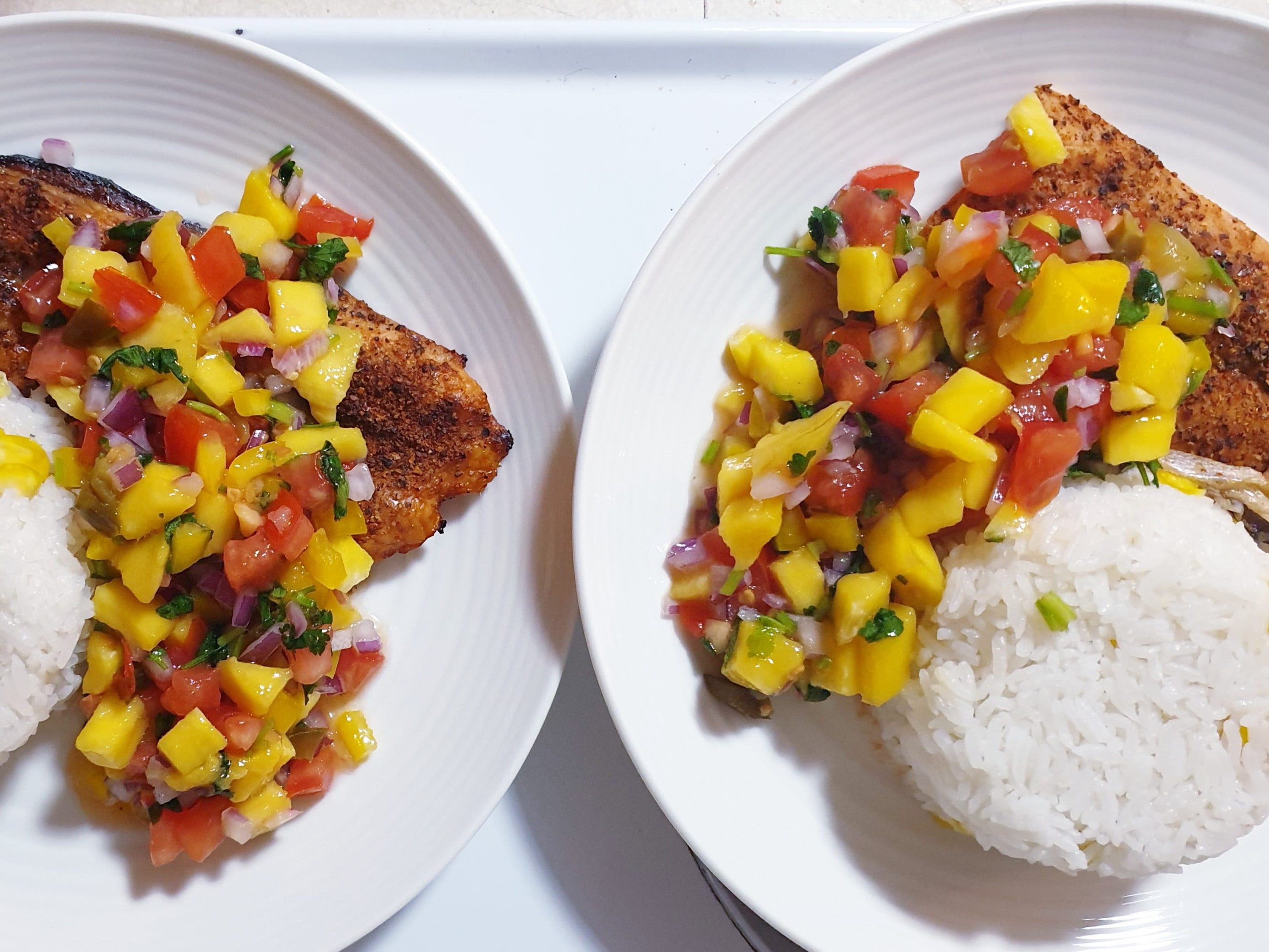
Read the piece with references and more photos of rice-based dishes I made here.
And now, a selection of top stories on my radar, a few personal recommendations, and the chart of the week.
ICYMI: The Previous Block was about a reference list, tbh. We’re still on prediction market watch!
Prediction markets are breaking the news and becoming their own beat by Neel Dhanesha for Nieman Lab.
ProPublica’s code of ethics is updated to say “no employee should wager on the outcome of news events on the prediction markets — regardless of whether or not they are involved in coverage of said event.” (H/T managing editor Charles Ornstein via XTwitter.)
CORRECTION NOTICE: None notified. DATA, DISINFORMATION & DEMOCRACY
How bloodstains photographed from space brought attention to a forgotten war
Isma’il Kushkush for CJR:
The fall of El-Fasher and its aftermath are another episode of mass atrocity in a power struggle that has been raging in Sudan since April of 2023 between the Sudanese Armed Forces and the RSF. A February 2026 United Nations fact-finding mission confirmed that the atrocities committed by RSF fighters in El-Fasher show “the hallmarks of genocide.” As in Afghanistan, Syria, Ukraine, and Iran, analysis of open-source intelligence (OSINT)—publicly available material such as social media posts, geolocation data, and satellite imagery—has proved crucial. Satellite imagery of El-Fasher analyzed by the Yale Humanitarian Research Lab shows evidence of mass killings by Rapid Support Forces (RSF) fighters. The lab’s first report, published in October of 2025, grabbed global media attention when it revealed “objects consistent with the size of human bodies on the ground near RSF vehicles, including at least five instances of reddish earth discoloration.”
“The fact that blood was visible from space, that was a moment that captured international headlines,” Shaina Lewis, a Sudan specialist and adviser for Preventing and Ending Mass Atrocities (PAEMA), an advocacy group, told me. “I think El-Fasher was a breakthrough moment for all of the wrong reasons. We saw this massive uptick in attention that we had been calling for for the entirety of the war.”
Loosely linked:
They photographed an execution in Bosnia. Did they influence the killer? by Barbara Matejčić for New Lines Magazine.
Online abuse is silencing women on a staggering scale – it’s a democratic crisis by Sharon Kechula for The Guardian.
The V&A catalogue row shows China’s censorship now travels through cultural supply chains by Ge Chen (Durham University) for The Conversation.
Orbán’s era was over in a flash and Hungary’s next PM is a man in a hurry by Nick Thorpe for BBC.
Niños que pueden jugar en su ordenador a violar y a torturar a mujeres: “La violencia machista da dinero” por Ariadna Martínez en elDiario.es.
Los alcaldes progresistas se reivindican como la vanguardia contra la ola ultra: “Somos los que estamos en primera línea” por José Marcos en El País.
En el capitalismo global, las grandes tecnológicas actúan como si fueran Estados por Carlos Bajo Erro en CTXT.
En attendant la démocratie artificielle par Blaise Mao dans Usbek & Rica.
L’âge, une information de plus en plus rare dans les journaux par Guillemette Faure dans La revue des médias.
WikiLeaks, l’archive inépuisable : comment Stefania Maurizi continue de traquer les secrets d’État par Florine Amenta dans La revue des médias.
What I read, listen, and watch

I’m reading A Bánh Mì for Two (2024) by Trinity Nguyen. Hey, I thought bánh mì was the Vietnamese counterpart to the Chinese pan mee but they are, in fact, very different. Anyway, this is romance fiction between foodies and it’s sweet, hihi.
I’m listening to TANGOTI’s episode on the racist AI TikTok scam. You’ve seen these too, right?
I’m watching More Perfect Union’s exposé on the Polymarket business model after the prediction market asked to work with them. How many weeks have we been on the prediction market-media complex? We’re not getting off.
Chart of the week
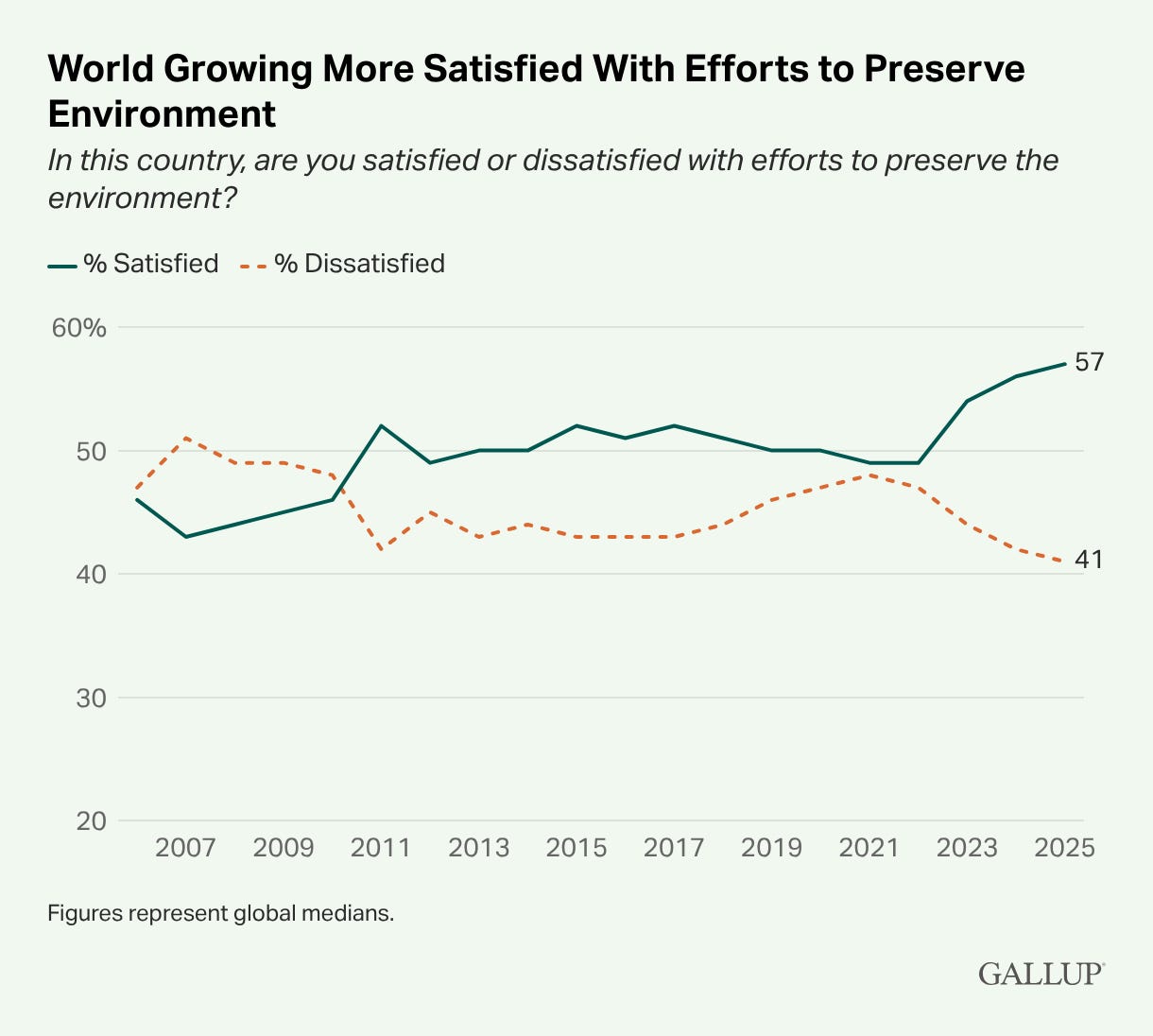
People are more satisfied with efforts to preserve the environment, according to global trends from Gallup World Poll data. Apparently, satisfaction is tied to political views, wrote Benedict Vigers for Gallup. Hm.