
The 300th Block: Exiled journalists, dead tech workers, and scammed soldiers
And a quick pulse check on digital sovereignty

This week…
Your reading time is about 5 minutes. Let’s start.
Growing chatter on digital sovereignty, at Davos, in Canada, France, and other parts of Western Europe. Huh, how interesting.

Your Wikipedia this week: Gunboat diplomacy
And now, a selection of top stories on my radar, a few personal recommendations, and the chart of the week.
ICYMI: The Previous Block was about displacement, Africa’s internet, and diaspora politics.
CORRECTION NOTICE: None notified.DISINFORMATION, MEDIA & JOURNALISM
Exposing the regime from afar: How Cuban journalists report on the island from exile
Gretel Kahn for RISJ:
Year after year, Cuba remains the worst country for press freedom in Latin America and one of the worst worldwide. The country’s Constitution declares the news media to be state property, effectively rendering any journalism outside the official press illegal.
However, the situation has deteriorated even further after the pandemic. In 2021, after a series of nation-wide protests, the regime significantly tightened control over online content, and this impacted the short-lived spring of independent outlets that came with the mass arrival of mobile internet to the island in 2019.
Hundreds of journalists were forced to flee the island while the ones who remained continued to endure harassment, imprisonment, and attacks by the government. Many were unable to exercise journalism altogether.
The struggle to maintain independent reporting now falls largely on those outside the island. Through conversations with four exiled journalists, a picture emerges of a movement that is physically displaced but editorially undeterred. It is worth noting that there are still journalists in Cuba doing independent journalism despite their government’s repression.
Loosely linked:
Letters from a party broadcaster by Dalia Parete and David Bandurski for Lingua Sinica.
A new Brazilian media law blurs lines between journalists and content creators by Leonardo Coelho for LJR.
The subject of Lyme disease is littered with misinformation. Celebrities are part of the problem, experts say by Britnei Bilhete and Brenda Witmer for CBC.
Periodismo moribundo para tiempos de emergencia democrática por Vanesa Jiménez en CTXT.
« Ils redoutent le scandale » : quand l’accès aux sources policières se complique par Léa Le Denmat dans La revue des médias.
DATA, AI & BIG TECH
Death of an Indian tech worker
Parth MN for Rest of World:
On a warm night last May, Nikhil Somwanshi sent his roommate a WhatsApp message asking him to tell his family that what was about to happen next was an accident.
The message triggered a frantic search for the 24-year-old machine-learning engineer in southeast Bengaluru, the city of 13 million known as India’s Silicon Valley.
Somwanshi was a star student from a small village in the farm-dotted countryside. Nine months prior, he’d landed a coveted job at Ola Krutrim, an artificial intelligence startup worth $1 billion. He was among the ranks of India’s globally renowned tech industry, which is estimated to be worth around $280 billion and employs more than 5 million people. The industry runs the spectrum from top-end firms like Krutrim to massive consulting and outsourcing companies.
Getting a job at Krutrim was a big deal for Somwanshi and his community. Banners went up in his village, congratulating him. He sent funds from his first paycheck to his parents, who built a small temple on their land in gratitude for their son’s good fortune. His salary of 3.7 million rupees ($41,000) was nearly 10 times what his family earned from farming.
But something has gone awry in the industry Somwanshi was entering.
Long read, good read. Loosely linked:
Beijing enlists AI to bring traditional Chinese medicine into the future by Nicole Fan for Rest of World.
Millions created deepfake nudes on Telegram as AI tools drive global wave of digital abuse by Priya Bharadia and Aisha Down for The Guardian.
Abusers using AI and digital tech to attack and control women by Rachel Hall for The Guardian.
Del cacareo en las redes sociales por Vicente Nascimento en CTXT.
La formation en marketing digital, ce business en ligne douteux qui promet la richesse et séduit les ados par Luc Chagnon dans Franceinfo.
DEMOCRACY, RIGHTS & REGULATION
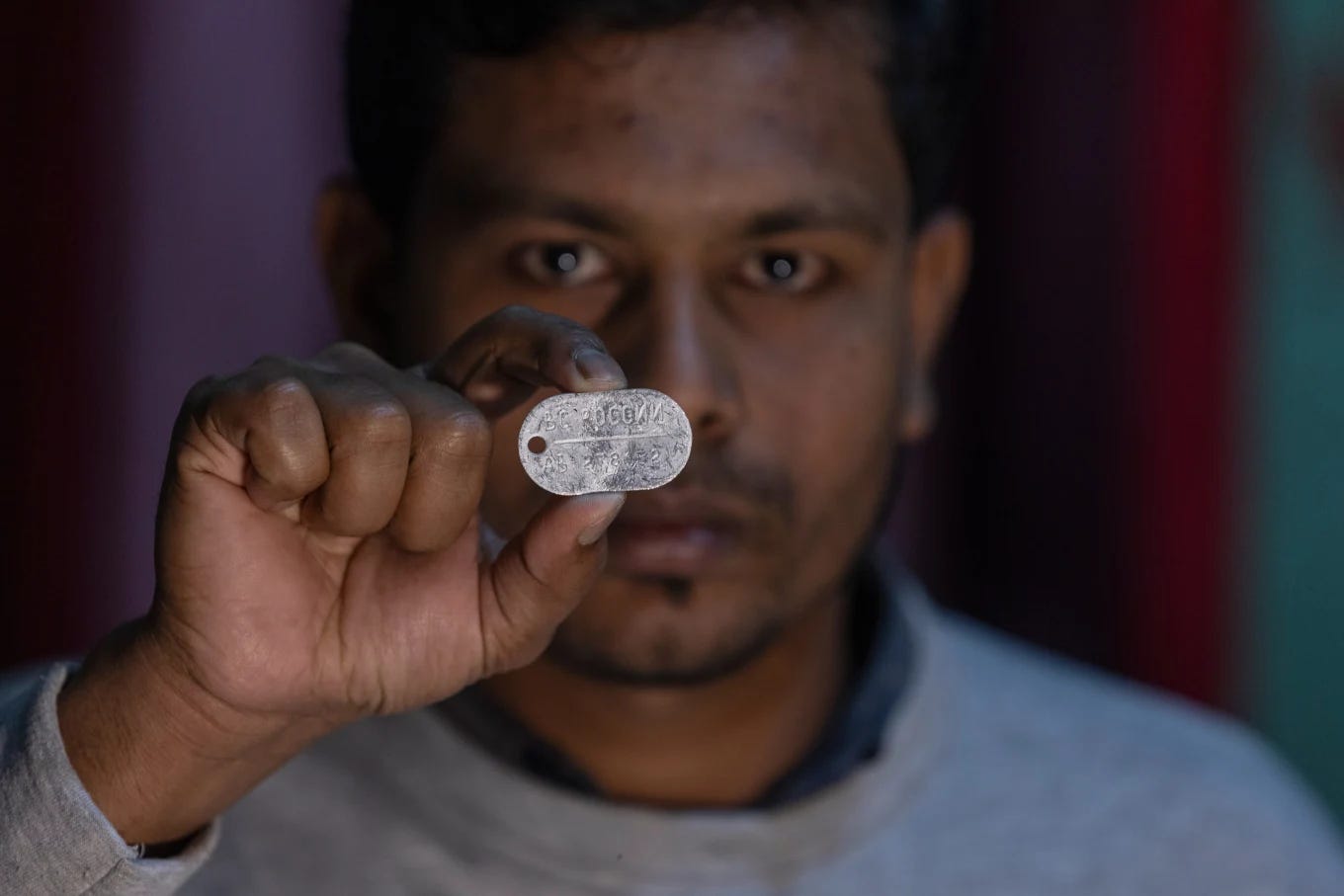
Workers from Bangladesh sought jobs in Russia but instead got sent to combat in Ukraine
Samya Kullab for AP:
A labor recruiter persuaded Maksudur Rahman to leave the tropical warmth of his hometown in Bangladesh and travel thousands of miles to frigid Russia for a job as a janitor.
Within weeks, he found himself on the front lines of Russia’s war in Ukraine.
An Associated Press investigation found that Bangladeshi workers were lured to Russia under the false promise of civilian work, only to be thrust into the chaos of combat in Ukraine. Many were threatened with violence, imprisonment or death.
AP spoke with three Bangladeshi men who escaped from the Russian military, including Rahman, who said that after arriving in Moscow, he and a group of fellow Bangladeshi workers were told to sign Russian documents that turned out to be military contracts. They were taken to an army camp for training in drone warfare techniques, medical evacuation procedures and basic combat skills using heavy weapons.
Loosely linked:
How the sound of drones inflicts psychological trauma in Ukraine by Ruchi Kumar for New Lines Magazine.
Anti-woke Germans in Russia used as propaganda for Putin by Anastasia Klein for DW.
African migration: focusing on Europe misses the point – most people move within the continent by Nadine Biehler, Emma Landmesser, and Rebecca Majewski (German Institute for International and Security Affairs) for The Conversation.
Estás en la invasion por Mateo Peraza en Gatopardo.
Mouvement agricole en France: aux racines de la colère par Adèle Surprenant dans Pivot.
What I read, listen, and watch

I’m reading Data Feminism (2020) by Catherine D’Ignazio and Lauren F. Klein. Did you know you can practically read the entire book on the website?
I’m listening to 404 Media podcast with Bellingcat’s Kolina Koltai on the people behind deepfake porn sites.
I’m watching DW’s documentarry on the online scam camps.
Chart of the week
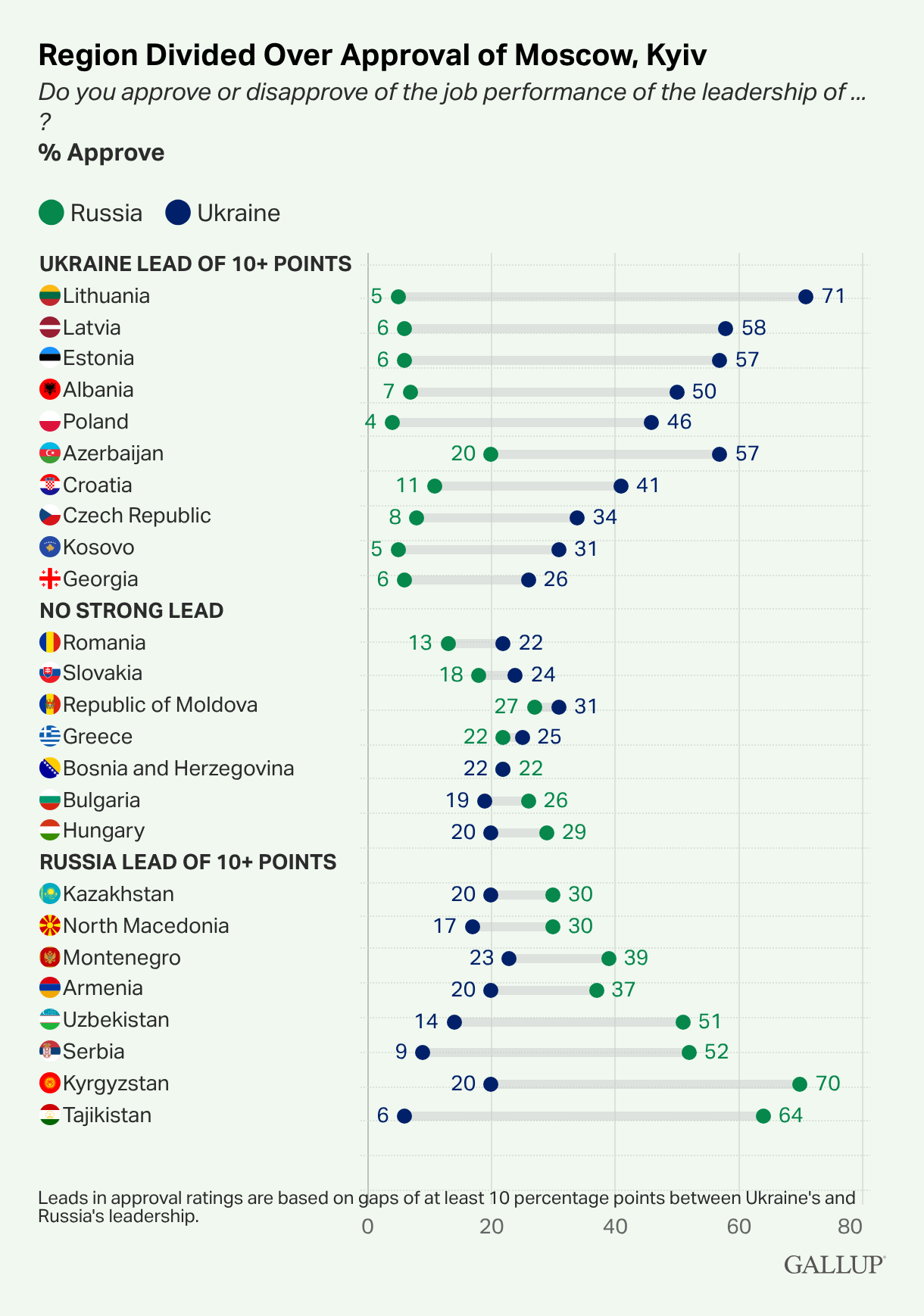
Kyiv’s lead in approval over Moscow narrows in their own backyard, according to Gallup. More here by Benedict Vigers and Galina Zapryanova.