
The 292nd Block: Essays, online investigations, and research
Connect the dots

This week…
Your reading time is about 5 minutes. Let’s start.

 Tiktok failed to load.
Enable 3rd party cookies or use another browser
I’m busy. I have a written assignment due next week about business-to-consumer contract law. I’ve been looking forward to studying and applying contract law knowledge this semester, but it’s so much harder than public law — which many of my peers found dreadful (I felt otherwise). Am I a weirdo?
I even started having nightmares about essay writing, dreaming about sitting for and failing a Malay national standardised test because I was accussed of producing an AI-generated essay by my ‘teacher,’ who so happened to be — in real life — a friend who is a clinical psychologist. (We never spoke to each other in Malay.) Neither of us is big on dream interpretation, though, but we both thought it was hilarious — and telling, what’s preoccupying my mind. (Genshin Impact, too, tbh, but I never get to dream about Arlecchino…) Anyway, I got this. Like what @/badgalsavvv said in her TikTok, we were writing essays by hand — the rough draft, the cleanup draft, and the final draft — in one class period, to turn it in.
Your Wikipedia this week: Illusion of explanatory depth
And now, a selection of top stories on my radar, a few personal recommendations, and the chart of the week.
ICYMI: The Previous Block was about news influencers and the manosphere. FWIW:
The grey zone of influencers and warfare in the Thai-Cambodia conflict by Surachanee Sriyai for Fulcrum.
CORRECTION NOTICE: None notified.ON THE MEDIA
The rise of citizen-led online investigations in Kenya
Maurice Oniang’o for RISJ:
The video was brutal. During the anti-government protests that swept through Nairobi on 17 June, a masked police officer was captured on camera raising his gun and shooting an unarmed bystander at point-blank range.
The police issued a familiar-sounding statement: a vague acknowledgement of the “incident,” with no name, no arrest, and only a general promise that the officer would be brought to justice. But this time, the old script unravelled. Within hours, the officer’s identity was circulating online, the result of a crowdsourced investigation led by young, tech-savvy Kenyans who turned into digital detectives.
On X, TikTok and Facebook, users scoured through photos and videos of police shared earlier that day. In some footage, an officer appeared unmasked, wearing a distinctive camouflage bandana, the same one which had covered the shooter’s face. On his wrist, a unique bracelet.
These small visual clues became the breadcrumbs that led to a TikTok account where the same man had posted clips of himself wearing identical accessories.
One user posted two photos: one showing the officer, earlier in the day, without a mask and wearing a distinctive cap. In the second image, the user had circled key identifiers – the cap and camouflage bandana, the bracelet on his wrist, and specific tactical gear. The message was clear: same man, same day. Another user shared screenshots from TikTok showing the officer’s full profile and videos of him wearing the bandana.
Soon, his details were circulating online, including his name, mobile number, and social media accounts. By the following day, faced with mounting public pressure and the officer’s identity already public, the police issued a second statement, this time officially naming him and confirming his arrest. He now faces murder charges.
Loosely linked:
Why did India order smartphone makers to install a government app? by Usaid Siddiqui for Al Jazeera.
Journalists’ unions file complaint in France for restrictions on press freedom in Gaza by Lowri Thomas (NYU) for Jurist.
Casualty of war: Sudan’s media emergency by Meera Selva for Nieman Reports.
ON AI
Artificial intelligence research has a slop problem, academics say: ‘It’s a mess’
Aisha Down for The Guardian:
A single person claims to have authored 113 academic papers on artificial intelligence this year, 89 of which will be presented this week at one of the world’s leading conference on AI and machine learning, which has raised questions among computer scientists about the state of AI research.
The author, Kevin Zhu, recently finished a bachelor’s degree in computer science at the University of California, Berkeley, and now runs Algoverse, an AI research and mentoring company for high schoolers – many of whom are his co-authors on the papers. Zhu himself graduated from high school in 2018.
Papers he has put out in the past two years cover subjects like using AI to locate nomadic pastoralists in sub-Saharan Africa, to evaluate skin lesions, and to translate Indonesian dialects. On his LinkedIn, he touts publishing “100+ top conference papers in the past year”, which have been “cited by OpenAI, Microsoft, Google, Stanford, MIT, Oxford and more”.
Zhu’s papers are a “disaster”, said Hany Farid, a professor of computer science at Berkeley, in an interview. “I’m fairly convinced that the whole thing, top to bottom, is just vibe coding,” he said, referring to the practice of using AI to create software.
Farid called attention to Zhu’s prolific publications in a recent LinkedIn post, which provoked discussion of other, similar cases among AI researchers, who said their newly popular discipline faces a deluge of low-quality research papers, fueled by academic pressures and, in some cases, AI tools.
In response to a query from the Guardian, Zhu said that he had supervised the 131 papers, which were “team endeavors” run by his company, Algoverse. The company charges $3,325 to high-school students and undergraduates for a selective 12-week online mentoring experience – which involves help submitting work to conferences.
Loosely linked:
Far-right extremists have been organizing online since before the internet – and AI is their next frontier by Michelle Lynn Kahn (University of Richmond) for The Conversation.
The hidden Kenyan workers training China’s AI models by Damilare Dosunmu and Tessie Waithira for Rest of World.
Japan is facing a dementia crisis – can technology help? by Suranjana Tewari for BBC.
Other curious links, including en español et français

LONG READ | Sleep is not just a physical need by Sara Protasi for Aeon.
INTERACTIVE | How Russian Cossacks drive young people to war by Miguel Ramalho and Richard Arnold for Bellingcat.
PHOTO ESSAY | Inside Ethiopia’s Fano insurgency by Robin Tutenges for The Guardian.
AfroféminasGPT: una inteligencia artificial decolonial y antirracista por Desirée Yépez en El País.
Del tsotsil al catalán, las lenguas minoritarias se abren camino junto al gigante español por Elena San José en El País.
Todo estalla en la escuela por Solana Camaño y Nicolás Daniluk (arte) en Anfibia.
Recueillir des confidences sans vampiriser les témoins, le dilemme des podcasteuses de l’intime par Coline Clavaud-Mégevand dans La revue des médias.
Tourisme, guerre, climat… Comment Google Street View est devenu un outil de pouvoir par Théo Cartron et Lorraine Gregori dans Usbek & Rica.
Devenir millionnaire avant 20 ans : comment des vidéos TikTok et Instagram pour gagner de l’argent facile séduisent les jeunes par Luc Chagnon dans Franceinfo.
What I read, listen, and watch
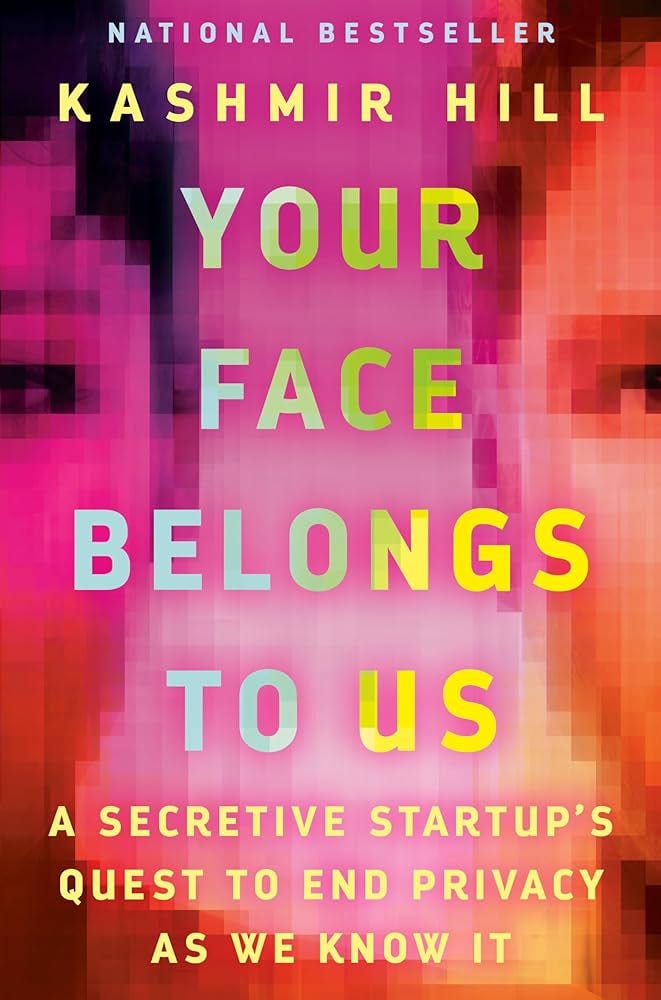
I’m reading Your Face Belongs To Us (2023) by Kashmir Hill about Clearview AI, the company that claimed to identify anyone with 99 per cent accuracy with just a snapshot of their face. (If you’re white.)
I’m listening to Al Jazeera’s The Inside Story on whether former colonial powers can be held accountable for past atrocities
I’m watching why right-winged ideology is gaining popularity in Japan by CNA Insider. What do you mean, ‘gaining’…?
Chart of the week
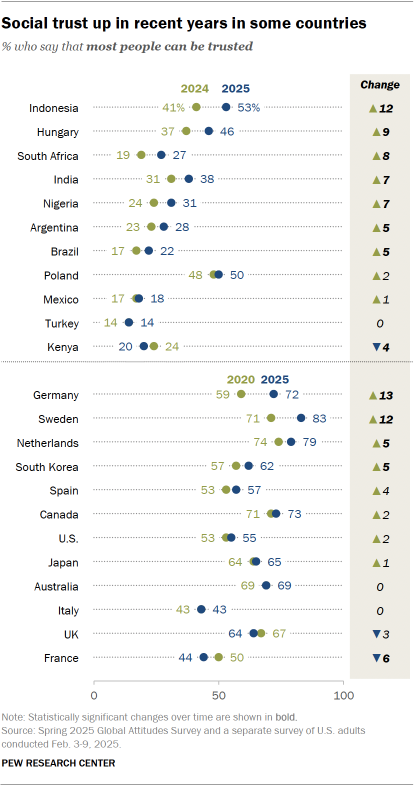
Where do most people trust others and where do they not? Jordan Lippert and Jonathan Schulman have some insights at Pew Research Center based on spring studies.
Brilliant curation this week! The Kenyan case you highlighted is a perfect example of how distributed investigation can flip power dynamics when traditional accountability fails. What catches my eye is how those tiny visual details (the bracelet, the bandana) became forensic evidnece in a public court. But I wonder if this creates a new vulnerability where anyone with distinctive accessories becomes identifiable in ways that might backfire for protestrs or whistleblowers. The sword cuts both ways when every pixel is a potential fingerprint.